How to Type Faster: Proven Techniques and Strategies
Increasing your typing speed is a skill that can be developed through practice, proper technique, and dedication. Whether you're aiming to boost your WPM (words per minute) for professional reasons or personal achievement, this comprehensive guide will teach you proven strategies to type faster and more efficiently.
Master the Fundamentals of Touch Typing
The foundation of fast typing is proper touch typing technique. Touch typing allows you to type without looking at the keyboard, which eliminates the time wasted searching for keys and increases overall speed significantly.
The Home Row Position
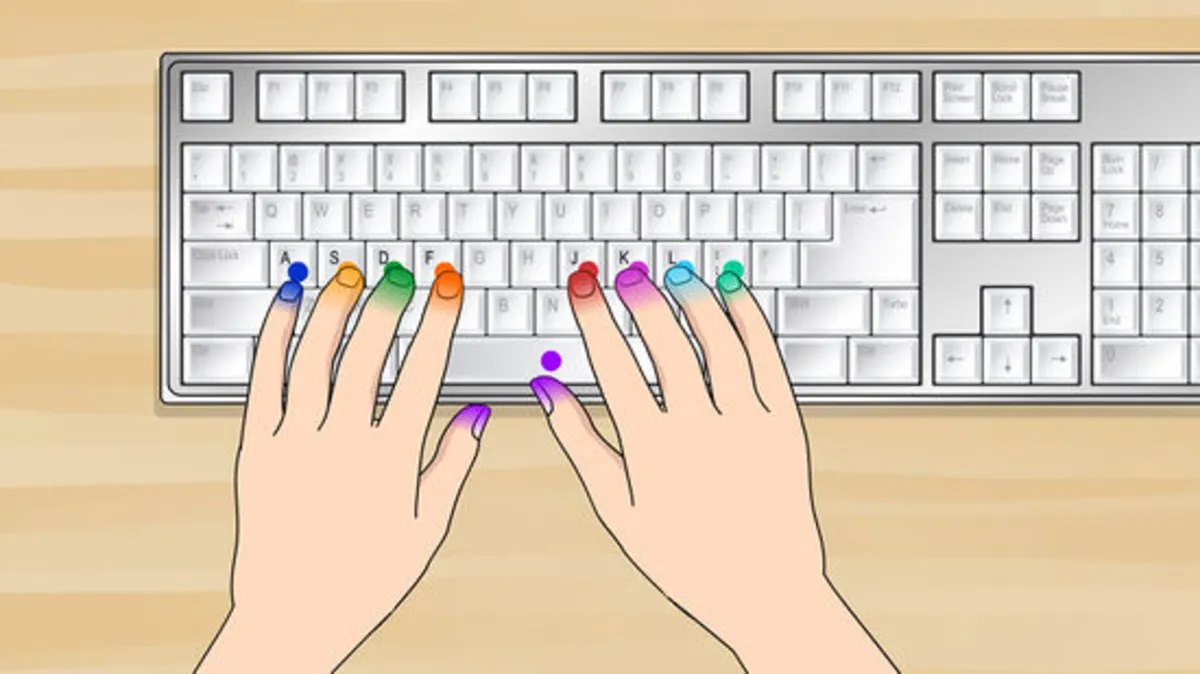
Begin by placing your fingers on the home row of the keyboard. Your left hand fingers should rest on A, S, D, F, and your right hand on J, K, L, and semicolon. This positioning is crucial because it allows your fingers to reach all keys efficiently without moving your hands.
- Left Hand: A (pinky), S (ring), D (middle), F (index)
- Right Hand: J (index), K (middle), L (ring), ; (pinky)
- Thumbs: Space bar
Proper Hand and Posture Alignment
Your physical setup dramatically affects typing speed and comfort. Maintain proper posture to prevent fatigue and injury:
- Sit with your back straight and shoulders relaxed
- Keep your elbows at a 90-degree angle
- Position your keyboard at elbow height
- Keep your wrists straight and slightly elevated
- Place your monitor at eye level, about 20-26 inches away
Proven Strategies to Type Faster
1. Practice Consistently
Consistency is key to improving typing speed. Dedicate 15-30 minutes daily to focused typing practice. Regular practice builds muscle memory, allowing your fingers to find keys automatically without conscious thought.
2. Focus on Accuracy Before Speed
This is the most important principle: accuracy comes before speed. Typing fast with many errors is counterproductive. Focus on typing correctly, and speed will naturally follow. Aim for 95% accuracy or higher before pushing for increased WPM.
3. Use Typing Practice Tools
Leverage typing practice platforms and games to make improvement enjoyable. Tools like typing tests and interactive lessons provide structured practice that targets specific skills.
4. Minimize Hand Movement
Efficient typists minimize unnecessary hand and finger movement. Keep your hands in the home row position and use finger extensions to reach other keys rather than moving your entire hand.
5. Learn Common Keyboard Shortcuts
Knowing keyboard shortcuts for common tasks reduces the need to use the mouse, which interrupts typing flow. Learn shortcuts for copy (Ctrl+C), paste (Ctrl+V), undo (Ctrl+Z), and other frequent operations.
Progressive Training Approach
Follow this structured approach to gradually increase your typing speed:
| Phase | Focus | Duration | Target WPM |
|---|---|---|---|
| Phase 1: Foundation | Home row keys, proper technique | 1-2 weeks | 20-30 WPM |
| Phase 2: Expansion | All letter keys, numbers, symbols | 2-3 weeks | 30-50 WPM |
| Phase 3: Speed Building | Increased pace, complex texts | 3-4 weeks | 50-80 WPM |
| Phase 4: Mastery | Advanced techniques, optimization | Ongoing | 80+ WPM |
Advanced Typing Speed Techniques
Anticipation Typing
Experienced typists develop the ability to anticipate upcoming letters and begin moving their fingers before consciously reading the next character. This subconscious prediction accelerates typing speed significantly.
Rhythm and Flow
Develop a consistent typing rhythm. Maintaining steady pace throughout a typing test or document improves both speed and accuracy. Avoid erratic bursts of speed followed by slow periods.
Specialized Typing Patterns
Learn common letter combinations and word patterns. English has predictable patterns (like "th," "ing," "tion") that experienced typists recognize and type automatically.
Common Mistakes That Slow You Down
Avoid these common typing habits that limit your speed:
- Looking at the keyboard: This breaks your focus and slows you down significantly
- Incorrect finger placement: Using wrong fingers for keys reduces efficiency
- Tense shoulders and wrists: Tension causes fatigue and reduces speed
- Ignoring posture: Poor posture leads to fatigue and injury
- Rushing accuracy: Prioritizing speed over accuracy creates bad habits
Track Your Progress
Regular testing helps you monitor improvement and stay motivated. Take typing speed tests weekly to track your WPM progress. Most people can expect to improve 5-10 WPM per month with consistent practice.
Conclusion: Your Path to Faster Typing
Learning how to type faster requires patience, practice, and proper technique. By mastering touch typing, maintaining focus on accuracy, and practicing consistently, you can significantly increase your typing speed. Remember that improvement is gradual, and celebrating small milestones keeps you motivated on your journey to becoming a fast, accurate typist.